
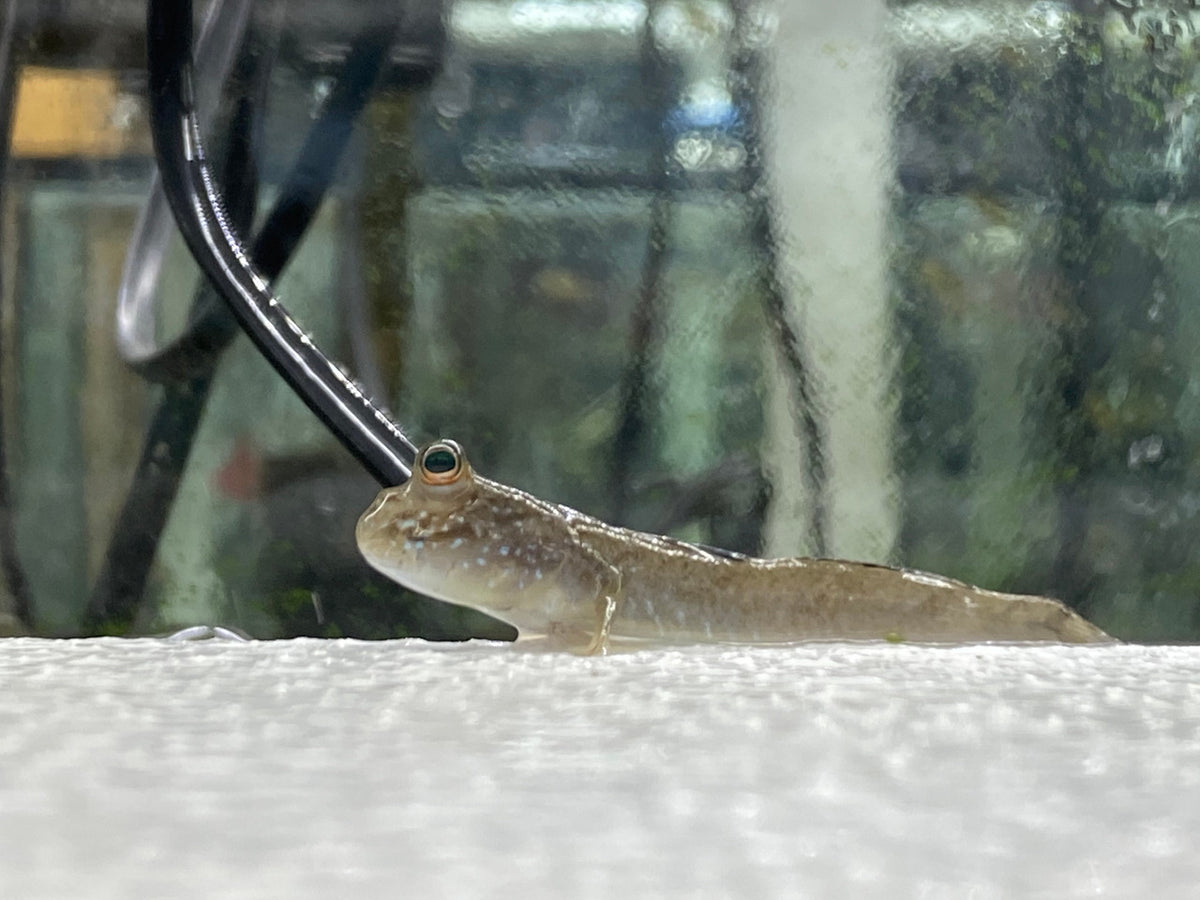
Quick answer: The African (Atlantic) Mudskipper, Periophthalmus barbarus, is not a true freshwater fish — despite sitting in freshwater-store tanks, it needs brackish water long-term (specific gravity roughly 1.005-1.015, built with a marine salt mix, not table salt), a half-land/half-water tank with a mud or sand bank it can haul out onto, a tight-fitting lid (they jump and climb), and warm water around 75-85°F. Keeping one in plain freshwater for the long haul is one of the most common mistakes new keepers make with this species.
Unique Appearance
The African Mudskipper is notable for its distinctive appearance. Unlike most fish, it has evolved to thrive both in water and on land. It features a flattened body with strong, robust pectoral fins that allow it to "walk" or skip across the mud. Its large, bulging eyes are positioned on top of its head, giving it an almost prehistoric look and enhancing its ability to spot predators and prey above the waterline.
Brackish, Not Freshwater: Getting the Water Right
This is the detail most beginner setups get wrong. Mudskippers are amphibious estuarine fish from mangrove swamps and tidal mudflats, and they need actual salinity to stay healthy over the long term — not just a neutral-to-alkaline freshwater pH. Build their water with a marine aquarium salt mix (never plain table or aquarium "tonic" salt) to a specific gravity of roughly 1.005 to 1.015, with pH 7.5-8.0 and temperature 75-85°F (24-29°C). A hydrometer or refractometer, not guesswork, is the only reliable way to hit that range.
Ideal Tank Conditions
- Tank Size: A minimum of 20 gallons is recommended for one mudskipper, with more floor space (a "long" tank) valued over height.
- Tank Setup: Split the tank into a water section for swimming and a dry, land section of mud or sand the mudskipper can climb out onto and rest — this amphibious access is non-negotiable, not optional decor. Incorporate rocks, driftwood, and plants to mimic a mangrove shoreline.
- Lid: Mudskippers are strong jumpers and climbers and will escape an open-top tank. Use a secure, well-ventilated lid.
Diet and Feeding
The African Mudskipper is an opportunistic feeder with a varied diet in the wild. In captivity, offer live or frozen foods such as insects, bloodworms, small crustaceans, and feeder fish, supplemented with high-quality carnivore pellets. A varied diet supports their health and vibrant coloration.
Active and Social Behavior
African Mudskippers are constantly exploring their environment, both in water and on land. Their "walking" behavior on their pectoral fins is fascinating to watch. They can be territorial, especially males, so provide plenty of hiding spots and sight-breaks to reduce aggression if housing more than one.
Tank Mates and Breeding
Because they need brackish water, suitable tank mates are limited to other brackish-tolerant species rather than typical freshwater community fish — other mudskippers, or small, non-aggressive brackish-compatible fish and invertebrates, work best. Breeding in captivity is rare; females lay eggs in mud or sand nests that the male guards until they hatch, but this requires very specific conditions and careful monitoring to pull off at home.
What You'll Need
- African Mudskipper
- Marine-grade aquarium salt mix (sized for brackish, not full-marine, salinity)
- A hydrometer or refractometer to check specific gravity
- Sand or mud substrate to build a dry basking area
Frequently Asked Questions
Can I keep an African Mudskipper in plain freshwater?
Not for the long term. Mudskippers are estuarine, brackish-water fish. They may tolerate freshwater briefly, but they need real salinity (specific gravity roughly 1.005-1.015) from a marine salt mix to stay healthy over time.
Does a mudskipper tank need a land area?
Yes. Mudskippers are amphibious and spend significant time out of water. A dry mud or sand bank they can climb onto is a care requirement, not an optional decoration.
Will my mudskipper escape the tank?
It can. Mudskippers are strong jumpers and climbers adapted to moving across mudflats, so a secure, well-ventilated lid is essential.
What should I feed an African Mudskipper?
Live or frozen insects, bloodworms, small crustaceans, and feeder fish, supplemented with high-quality carnivore pellets. Offer a varied diet rather than one staple food.
Can African Mudskippers live with regular freshwater community fish?
Generally no. Because they require brackish water, their tank mates need to tolerate that same salinity, which rules out most typical freshwater community species.
About the author: Roger Ma owns Pet Zone Tropical Fish, San Diego's monster-fish and aquascaping specialty store (University Ave and Convoy District locations), and has kept and bred freshwater, brackish, and oddball species for over two decades. Every aquarium is unique, so observe your tank's inhabitants and adjust your routine as needed. Happy fishkeeping from all of us at PetZoneSD!