
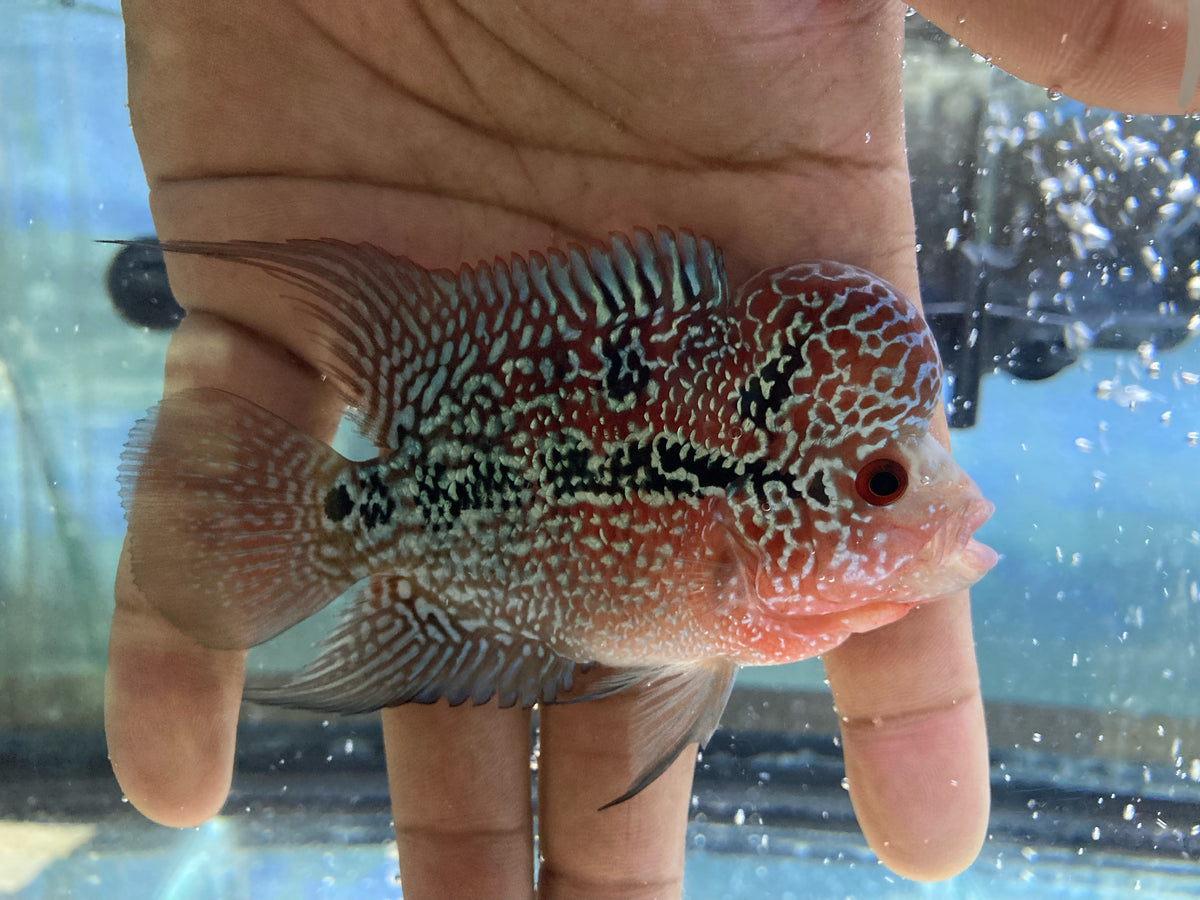
Quick answer: Flowerhorn Cichlids are a man-made hybrid, first bred in Malaysia in the late 1990s and prized for their vivid color and prominent nuchal (head) hump. They need a large tank (55 gallons minimum for one adult), warm slightly alkaline water (80-85°F, pH 7.4-8.0), a protein-rich diet, and in nearly all cases a species-only tank, since they're highly territorial and often aggressive toward tank mates.
What Is a Flowerhorn Cichlid?
Flowerhorns are a hybrid species created through the crossbreeding of several different cichlid species, which is why their genetics, appearance, and behavior don't trace back to a single wild ancestor. Being man-made, they have no natural evolutionary history; they were first bred in the late 1990s in Malaysia and quickly became popular worldwide for their vivid colors and the prominent nuchal hump many lines develop on their heads.
Appearance and the Nuchal Hump
Flowerhorns are known for their vibrant colors and the characteristic hump on their forehead, called the nuchal hump (or "kok" in hobbyist terms). Every Flowerhorn is unique in its color pattern, pearling, and hump size, which is part of why the hobby has developed so many named strains and why individual fish are often bought and sold on their own distinct look rather than as an interchangeable species. In captivity, they typically grow to 12-16 inches.
Tank Setup and Water Parameters
A single adult Flowerhorn needs at least a 55-gallon tank, with more room strongly preferred given their adult size and active, often boisterous swimming style. They do best in slightly alkaline water, pH 7.4 to 8.0, at a warmer temperature range of 80 to 85°F than most community fish are kept at. Strong filtration matters since Flowerhorns are messy, heavy-bodied eaters, and regular water changes keep both water quality and their coloration in good shape.
Diet and Feeding
Flowerhorns are omnivorous but need a diet rich in protein to support their size and color development. High-quality color-enhancing pellets formulated specifically for Flowerhorns are the staple most keepers rely on, supplemented with frozen shrimp, bloodworms, and occasional small pieces of meat or fish. A consistent, protein-rich diet is also one of the biggest factors in how vivid a Flowerhorn's color and hump development turn out as it matures.
Temperament and Tank Mates
Flowerhorns can be territorial and aggressive, especially toward other cichlids, and this is the single biggest thing to plan around before bringing one home. In nearly every case, a Flowerhorn is best kept alone in a species-only tank. If a tankmate is attempted at all, it needs to be a similarly large, similarly robust species, and even then, aggression is common enough that most experienced keepers simply don't recommend it. On the upside, Flowerhorns are also known for being unusually interactive and responsive to their owners, often "greeting" people at the glass, which is a big part of their appeal despite the aggression.
Lifespan
With proper care, stable warm water, and a protein-rich diet, Flowerhorns commonly live 10 to 12 years in captivity.
Shop Flowerhorns
Browse our current live Flowerhorns in the Flowerhorns collection and shop color-enhancing Flowerhorn Food to support growth, hump development, and coloration. For strain identification, genetics, and breeding-line deep dives beyond general care, see our dedicated site, Flowerhorn Hobby.
Frequently Asked Questions
Can I keep a Flowerhorn with other fish?
In most cases, no. Flowerhorns are territorial and often aggressive, especially toward other cichlids, so a species-only tank is the standard recommendation. A tankmate, if attempted at all, needs to be similarly large and robust, and even then success isn't guaranteed.
How big of a tank does a Flowerhorn need?
A minimum of 55 gallons for one adult Flowerhorn, with more space strongly preferred given their adult size (12-16 inches) and active swimming style.
Why does my Flowerhorn's hump size vary from others I've seen?
Hump (nuchal hump) size varies by individual fish, strain line, age, and diet. Every Flowerhorn is unique in its color pattern and hump development, which is part of why specific fish are often bought and sold on their individual look.
What should I feed my Flowerhorn for the best color?
A protein-rich diet is key: high-quality color-enhancing Flowerhorn pellets as a staple, supplemented with frozen shrimp, bloodworms, and occasional meat or fish pieces. Diet is one of the biggest factors in how vivid their coloration and hump development turn out.
How long do Flowerhorn Cichlids live?
With proper care, stable warm water, and a protein-rich diet, Flowerhorns commonly live 10 to 12 years in captivity.
About the author: Roger Ma owns Pet Zone Tropical Fish, San Diego's monster-fish and aquascaping specialty store, which carries a rotating live selection of Flowerhorn Cichlids and color-enhancing Flowerhorn food.