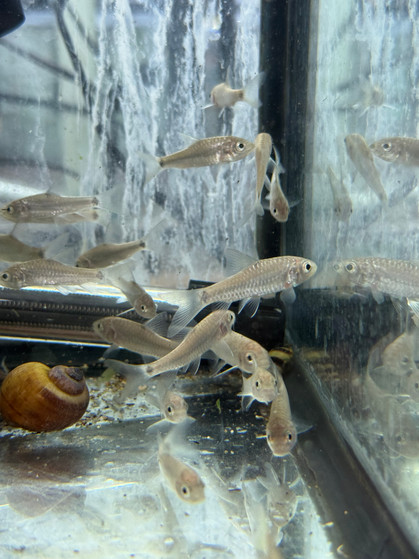


The Gold Mahseer, also widely known as the Golden Mahseer, is a legendary large-growing freshwater fish prized for its powerful body shape, bold scales, and beautiful gold-to-bronze coloration. Scientifically known as Tor putitora, this species is one of the most iconic mahseer fish in the aquarium and sport-fishing world.
Also called Putitor Mahseer, Himalayan Mahseer, Common Himalayan Mahseer, Copper Mahseer, Yellowfin Mahseer, and Putitora Mahseer, this fish comes from fast-moving river systems and rocky streams across the Himalayan and South Asian region. In the aquarium, it is best suited for experienced hobbyists with very large tanks, indoor ponds, or monster fish setups.
Gold Mahseer are active, strong swimmers that appreciate clean, well-oxygenated water, strong filtration, and plenty of open swimming space. Juveniles may show a more subtle silver-bronze tone, but as they mature, they can develop a stronger golden sheen with reddish, bronze, or yellow tones in the fins.
This is not a small community fish. Gold Mahseer should be housed with other large, fast-moving, similarly sized tankmates that can handle strong water movement and active feeding behavior. Avoid keeping them with tiny fish, slow-moving fish, or delicate species that may be outcompeted for food.
For the right keeper, the Gold Mahseer is an incredible centerpiece fish with a wild river-fish look, impressive size potential, and tons of personality.
Quick Care Guide
Scientific Name: Tor putitora
Older / Synonym Scientific Names: Cyprinus putitora, Barbus putitora, Barbus macrocephalus, Cyprinus mosal, Tor mosal, Tor progeneius
Common Names: Gold Mahseer, Golden Mahseer, Putitor Mahseer, Putitora Mahseer, Himalayan Mahseer, Common Himalayan Mahseer, Copper Mahseer, Yellowfin Mahseer, Assam Mahseer, Mahseer, Mahsir, Mahasir, Sahara, Chadu, Corchula
Family: Cyprinidae
Origin: Himalayan / South Asian river systems
Adult Size: Extremely large; best planned as a pond-size or monster fish species long term
Temperament: Active, powerful, generally peaceful with similarly sized fish
Difficulty: Advanced
Minimum Tank Size: 180 gallons+ for juveniles; much larger or pond-style systems recommended long term
Temperature: 68–78°F
pH: 6.8–7.8
Diet: Omnivore; accepts quality pellets, frozen foods, shrimp, insects, worms, algae-based foods, vegetable matter, and occasional fruit-based foods
Water Flow: Moderate to strong flow preferred
Aquascape Style: Open swimming space with rocks, large driftwood, strong aeration, and heavy filtration