
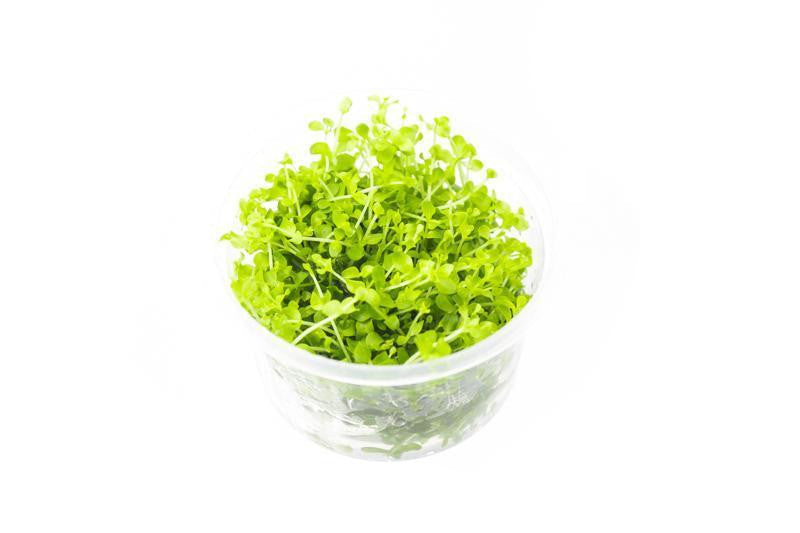
A carpet of low, bright green plants across the front of a tank is one of the most eye-catching looks in aquascaping. It is also one of the most common places beginners get stuck: the plants melt, float up, or get swallowed by algae before they ever join together. The good news is that carpets are not magic. Pick a plant that suits your setup, give it the right start, and be patient for a few weeks. This guide walks through the most popular carpeting plants we carry at Pet Zone and how to get them growing.
What makes a good carpeting plant?
Carpeting plants are short foreground plants that spread sideways by runners or creeping stems instead of growing tall. Over time the individual clumps knit into one continuous lawn. Three things decide how fast that happens:
- Light. Most carpets need light that reaches the substrate. A tall tank or a weak light leaves the foreground in shade, which is why shallow rimless tanks are so popular for carpets.
- Carbon (CO2). Many carpet plants will grow without injected CO2, but they grow slower, taller and looser. CO2 is the single biggest upgrade for a dense carpet.
- Substrate. Fine, nutrient-rich aqua soil gives tiny roots something to grip and feed from. Plain gravel makes carpets much harder.
Carpets at a glance
- Monte Carlo (Micranthemum tweediei): bright round leaves, medium light and medium CO2. Tropica lists its origin as Argentina.
- Dwarf hair grass (Eleocharis sp. 'Mini'): fine grass-like blades that spread by runners. Forgiving once rooted.
- Marsilea (water clover, Marsilea hirsuta): a slow, very low aquatic fern that tolerates lower light.
- Staurogyne repens: a bushy, low stem plant that works in low-tech tanks.
- HC 'Cuba' (Hemianthus callitrichoides) and Glossostigma: the tiniest, most striking carpets, best saved for high light and CO2.
Monte Carlo: the best all-rounder
If we could recommend only one carpet to a first-timer, it would be Monte Carlo. Its leaves are larger than HC, so it is easier to plant and holds on better when it is young. Tropica rates it medium for light, CO2 and difficulty and notes that it forms a fast-growing carpet in good conditions. It will grow in a tank without CO2, just more slowly and less compactly. Our Monte Carlo UNS tissue culture cups are an easy way to start.
Dwarf hair grass: classic and forgiving
Dwarf hair grass creates the "lawn" look you see in nature-style aquascapes. It spreads by sending out runners under the substrate, so it can look sparse for the first couple of weeks before it suddenly fills in. Plant it in small tufts about a finger-width apart and trim it like a lawn once it takes off. Try our Eleocharis Parvulus Mini UNS tissue culture.
Marsilea and Staurogyne: carpets for lower light
No CO2 and only a modest light? Look at Marsilea hirsuta and Staurogyne repens. Marsilea is a true aquatic fern that stays very low and creeps slowly across the substrate. Staurogyne repens is a compact, bushy plant that you can trim to keep low. Neither will cover a tank overnight, but both are steady growers that rarely melt. Browse more beginner options in our Easy Low-Tech Aquarium Plants collection.
HC 'Cuba' and Glossostigma: the advanced carpets
HC 'Cuba' has some of the smallest leaves of any aquarium plant and makes a velvet-like carpet. Glossostigma grows a little larger and fast. Both reward high light, injected CO2 and regular fertilizing, and both tend to grow upward or fade when conditions are weaker. If this is your first planted tank, start with Monte Carlo or dwarf hair grass and come back to these on your second scape.
Why tissue culture is the easiest start
Tissue culture (TC) plants are grown in sterile lab cups. That means no snails, no pest eggs and no algae hitching a ride into your new tank, which matters a lot in the first weeks when a carpet is most vulnerable. One cup usually holds dozens of tiny plantlets that you can split into many small plugs. See every TC cup we carry in our new Tissue Culture Aquarium Plants collection.
How to plant a carpet, step by step
- Prepare the substrate. Use a fine aqua soil in the foreground, about 1 to 2 inches deep. We stock UNS Controsoil and other options in Substrate & CO2.
- Rinse the gel. Pop the plants out of the TC cup and gently rinse off the growing gel in tank water.
- Split into small plugs. Tease the mass into pea-sized clumps. More, smaller plugs fill in faster than a few big ones.
- Plant with tweezers. Push each plug into the soil at an angle and let the substrate close over the roots. Space them roughly half an inch to an inch apart.
- Fill gently. Lay plastic wrap or a plate over the soil and pour water slowly so the plugs stay put.
- Keep the lights steady. Run a consistent photoperiod (many hobbyists start around 6 to 8 hours) and do regular water changes while the tank settles.
Try the dry start method
For Monte Carlo, HC and hair grass, many aquascapers use the "dry start": plant the carpet in damp soil, cover the tank with plastic wrap to hold in humidity, and mist it daily for several weeks before flooding. The plants root in without algae competition or plants floating away. It takes patience, but it is one of the most reliable ways to get a full carpet in a new tank.
Choosing the right tank and light
Shallow tanks make carpets easier because light reaches the bottom. If you are still choosing a tank, our guide to UNS rimless tank sizes compares footprints and heights, and the full lineup is in our UNS collection.
Common carpet problems
- Plugs floating up: plant deeper and in smaller clumps, or try the dry start.
- Growing tall and leggy: usually not enough light or CO2 at the substrate.
- Melting in week one: normal for some plants as they switch from lab or emersed growth to underwater leaves. Leave the roots in place and keep water clean.
- Algae on the carpet: shorten the light period, keep up water changes and add algae-eating shrimp once the tank is cycled.
Get help building your carpet
Carpets are one of our favorite things to talk about. Stop by our Convoy store in San Diego to see planted displays in person, or check our aquascaping classes and events. Plant stock changes often, so call ahead to confirm what is in stock at 866-MY-FISHY.