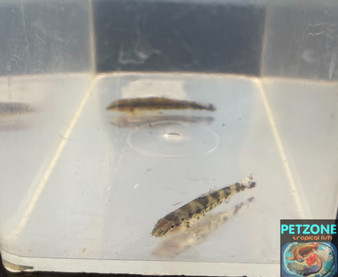

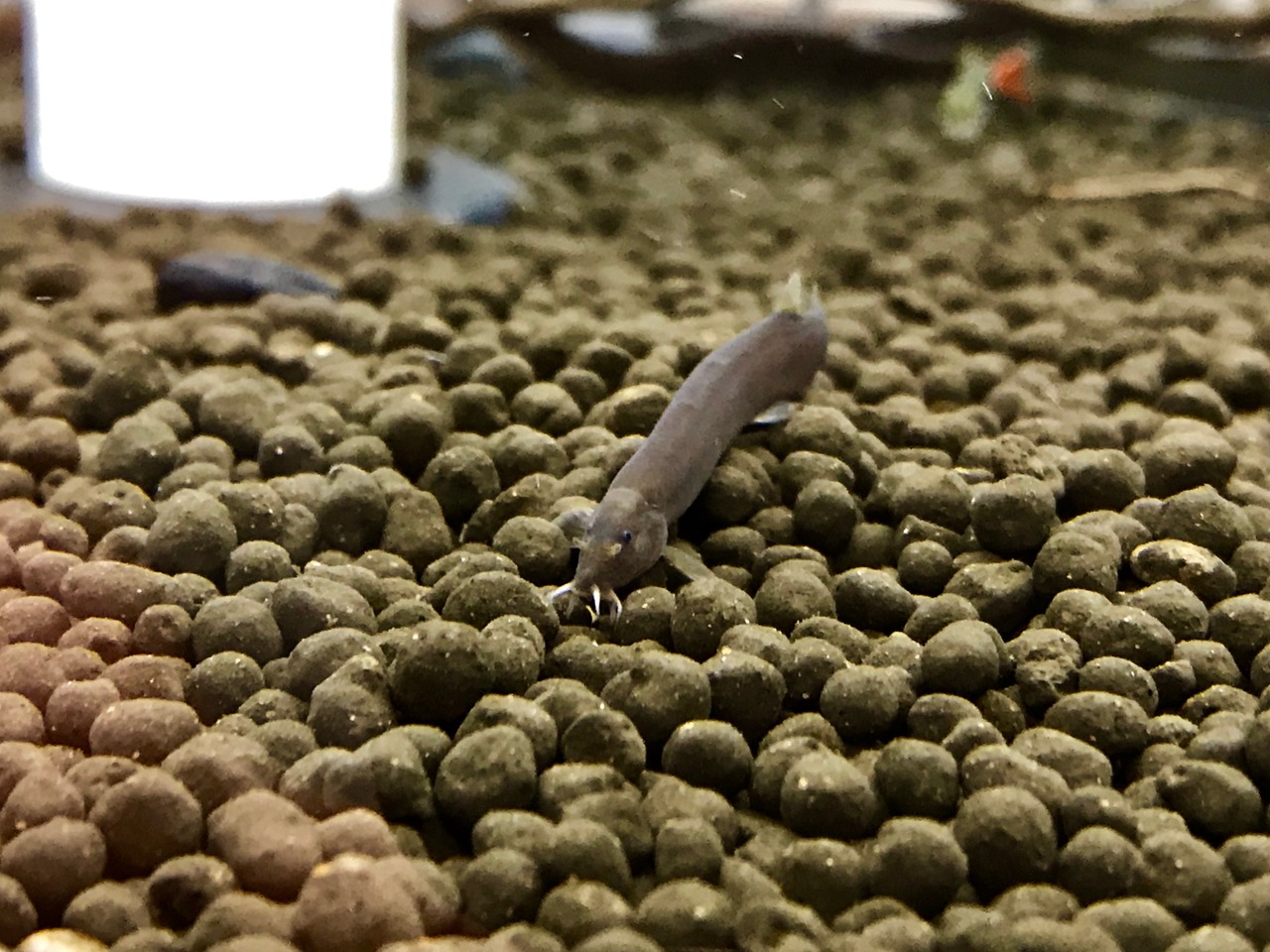


Profile Overview
-
Common Names: Black Kuhli Loach, Java Loach, Chocolate Kuhli Loach, Cinnamon Loach
Scientific Name:Pangio oblonga -
Family: Cobitidae (Loaches)
-
Origin: Southeast Asia (Indonesia, Malaysia, Thailand, Borneo)
-
1. Appearance
Unlike the standard striped Kuhli Loach (Pangio kuhlii), the Black Kuhli Loach sports a solid, uniform color.
-
Coloration: Ranges from a deep chocolate brown to a muddy black. Under specific lighting, they may appear reddish-brown (hence the name "Cinnamon Loach").
-
Body Shape: Long, slender, eel-like body with small fins located far back.
Whiskers: They possess three pairs of barbels (whiskers) around the mouth, used to sift through substrate for food. -
2. Tank Requirements & Habitat
These fish are naturally found in slow-moving forest streams with muddy or sandy bottoms. Replicating this is critical for their health.
Substrate (Crucial): You must use soft sand. These loaches love to burrow and sift; rough gravel can damage their delicate barbels and scratch their scaleless bodies, leading to infection.-
Decor: They require "clutter." Provide plenty of hiding spots using driftwood, rounded rocks, and caves.
-
Plants: Dense vegetation is highly recommended (Java Fern, Cryptocoryne, Anubias). Leaf litter (like Indian Almond Leaves) is excellent for mimicking their natural blackwater environment.
-
Filtration: Use a sponge filter or cover the intake of your power filter with a sponge. Their slender bodies can easily get sucked into filter motors.
3. Water Parameters
Black Kuhli Loaches are "scaleless" (they have very microscopic scales), making them highly sensitive to water quality shifts and medications.
-
Temperature: 75°F – 86°F (24°C – 30°C)
pH: 5.5 – 7.0 (Slightly acidic to neutral) -
Hardness: Soft to Medium (0 – 10 dKH)
-
Ammonia/Nitrite: 0 ppm (Intolerant to spikes)
4. Diet & Feeding
They are nocturnal scavengers that sift through the sand for food.
Primary Diet: Sinking pellets or wafers are essential (they will not come to the surface to eat).-
Protein: Live or frozen foods are their favorite. Bloodworms, brine shrimp, daphnia, and tubifex worms.
-
Vegetables: Blanched zucchini or spinach can be offered occasionally.
Feeding Tip: Feed them at night after the tank lights go off to ensure they get food without competing with faster daytime swimmers
5. Behavior & Compatibility
-
Social Needs: These are not solitary fish. They must be kept in groups of at least 3 to 6. A lone Kuhli Loach will likely hide permanently and succumb to stress.
-
Activity: Primarily nocturnal. You may see them "glass surfing" (swimming loops up and down the glass) when barometric pressure changes or during feeding time.
Tank Mates: -
-
Safe: Rasboras (Harlequin, Chili), Tetras (Neon, Ember), Corydoras, Gouramis (Honey, Sparkling), and Shrimp (usually safe with adult shrimp, may eat babies).
-
Avoid: Cichlids, Goldfish, Tiger Barbs, Bettas (depends on the Betta's temperament), or any fish large enough to eat a noodle-shaped snack.
-
6. Special Care Notes
-
Medication Sensitivity: Because they are effectively scaleless, they absorb chemicals rapidly. Avoid copper-based medications (often used for snail removal) and use half-doses of standard fish medications (like Ich treatments) unless the product specifically says it is safe for scaleless fish.
-
The "Disappearing Act": It is common to introduce them to a tank and not see them for weeks. As long as water parameters are good and food is disappearing, they are likely fine.
-