
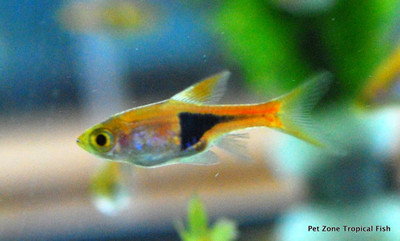
Harlequin Rasbora
Posted by Max Gandara on on 15th Jan 2026
Harlequin Rasbora Care Guide
The Harlequin Rasbora is a peaceful and colorful freshwater fish that is highly popular in community and planted aquariums. Known for its distinctive black triangular marking and active schooling behavior it is an excellent choice for both beginner and experienced fish keepers.
Appearance and Size
Harlequin Rasboras have a slender laterally compressed body with a copper orange to pinkish coloration. A bold black triangular patch extends from the middle of the body toward the tail which gives the fish its common name. Adults typically grow to about 1.75 to 2 inches in length. Females are usually slightly larger and rounder while males are slimmer with more intense coloration.
Natural Habitat and Behavior
This species is native to slow moving streams swamps and peat forests of Southeast Asia. They naturally inhabit soft acidic waters rich in tannins and dense vegetation. Harlequin Rasboras are peaceful schooling fish and should be kept in groups of at least six though larger groups are strongly recommended. In groups they are more active confident and display better color.
Aquarium Requirements
A minimum tank size of 10 gallons is suitable for a small school but larger tanks provide better stability and swimming space. Water temperature should be maintained between 72 and 80 degrees Fahrenheit. The ideal pH range is 6.0 to 7.0 with soft to slightly hard water.
A planted aquarium with open swimming areas works best. Dark substrate floating plants and driftwood help replicate their natural environment and enhance coloration. Gentle filtration and low to moderate water flow are preferred.
Diet and Feeding
Harlequin Rasboras are omnivores and accept a wide variety of foods. A high quality flake or small pellet should be the staple diet. Supplement with frozen or live foods such as brine shrimp daphnia and bloodworms to maintain good health and vibrant color. Feed small amounts once or twice daily.
Tank Mates
They are ideal community fish and do well with other peaceful species. Suitable tank mates include small tetras dwarf gouramis corydoras loaches and shrimp. Avoid aggressive or much larger fish that may view them as food.
Breeding
Breeding Harlequin Rasboras is possible in aquariums but requires specific conditions. They are egg layers that deposit eggs on the underside of broad plant leaves. Soft slightly acidic water and subdued lighting help encourage spawning. Adults should be removed after spawning to protect the eggs. Fry hatch in about one to two days and should be fed infusoria followed by baby brine shrimp.
General Care and Health
Harlequin Rasboras are hardy when kept in stable water conditions. Regular water changes and a balanced diet help prevent disease. Stress from poor water quality or small group sizes can lead to faded color and illness.
Summary
The Harlequin Rasbora is a beautiful peaceful and easy to care for schooling fish that thrives in planted community aquariums. Its striking pattern calm temperament and adaptability make it a favorite among freshwater aquarium enthusiasts.