
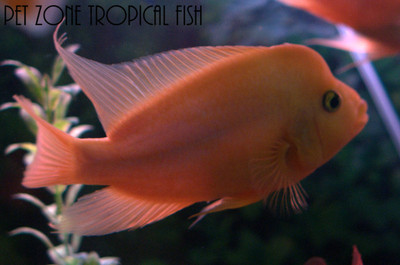
Red Devil Cichlid – Amphilophus labiatus
Posted by Max Gandara on on 17th Sep 2025
The Red Devil Cichlid (Amphilophus labiatus) is a bold and striking freshwater fish known for its vibrant coloration and lively personality. Native to the lakes and waterways of Central America, particularly Nicaragua and Costa Rica, this species has become a favorite among aquarists who enjoy keeping large, intelligent, and interactive fish.
The Red Devil Cichlid is named for its bright orange, red, or white coloration, which can vary between individuals. They often develop unique markings or patterns, giving each fish its own distinct look. They have a robust, stocky body and strong jaws, which they use to rearrange their environment and establish territories. Males may develop a prominent nuchal hump on their heads as they mature, especially during breeding.
This cichlid is known for its outgoing and sometimes aggressive nature. It thrives best in a spacious aquarium with plenty of open swimming space and strong filtration. Due to their territorial instincts, Red Devils are usually kept either singly or with other large, similarly tempered cichlids. They are also known to dig and move substrate, so decorations should be sturdy and well-secured.
Red Devil Cichlids are omnivores and enjoy a varied diet. High-quality cichlid pellets, frozen or live foods such as shrimp, earthworms, and crickets, along with some vegetable matter, help keep them healthy and vibrant. A nutritious and balanced diet also helps enhance their brilliant coloration.
Breeding Red Devil Cichlids is relatively straightforward for experienced aquarists. They are devoted parents, with both the male and female guarding the eggs and fry aggressively. Provide flat rocks or similar surfaces for egg-laying, and ensure tankmates are limited or separated during breeding to prevent conflict.
With their bright colors, intelligence, and bold personality, the Red Devil Cichlid is a centerpiece species for large aquariums. When given proper care, they can live for many years and form a unique bond with their keepers, making them a rewarding addition to a dedicated aquarist’s collection.